
Overview
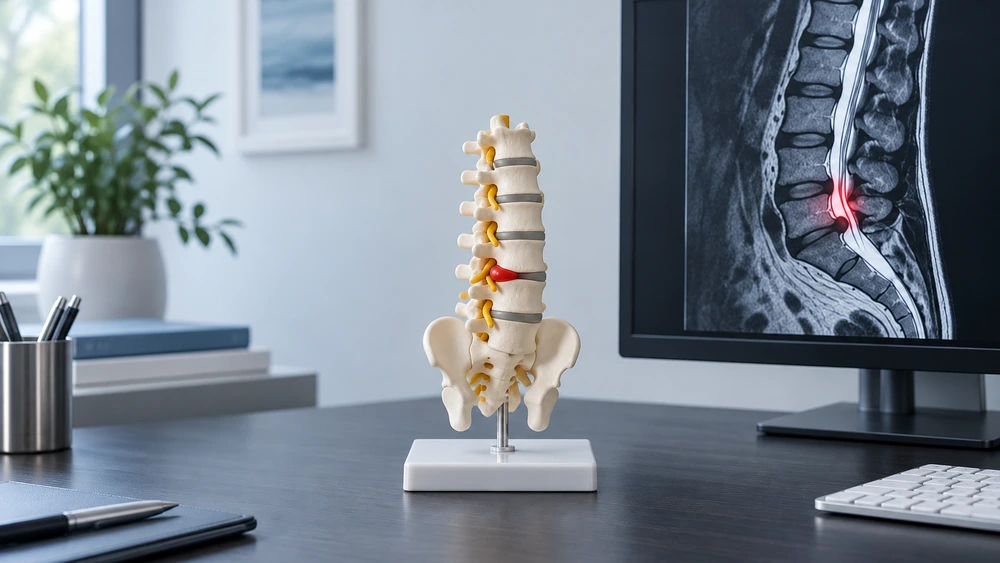
Slipped disc surgery is performed to relieve pressure on a spinal nerve. This condition, also known as a herniated or prolapsed disc, occurs when the discs between the vertebrae weaken or tear. As a result, the softer inner material bulges out, pressing on nearby nerves. This often leads to pain radiating into the legs or arms, frequently referred to as sciatica. Surgery aims to alleviate this pressure, not to reposition the disc itself. During the procedure, the fragment of disc material that is compressing the nerve is removed, sometimes along with a small amount of surrounding bone or ligament to create additional space.
The most commonly performed operation for lumbar disc herniation is a microdiscectomy. This procedure is typically done through a small incision using a microscope or magnification. In cases where narrowing of the canal also contributes to symptoms, a laminectomy or laminotomy may be performed. For certain cervical disc problems, an anterior cervical discectomy is indicated.
It is important to note that surgery is usually considered later in the treatment pathway. According to NICE, non-surgical management options, including physiotherapy, exercise, and pain relief, should be attempted first. These conservative treatments are effective for many patients.
Who is it for?
Not every patient with a slipped disc requires surgery. Many individuals experience improvement without surgical intervention. Surgery may be appropriate when symptoms are severe, persistent, or progressive, and imaging confirms that a disc is compressing a nerve in a way that aligns with the patient’s symptoms.
Assessment for surgical consideration may be advisable if you have:
- Leg pain that is more troubling than your back pain and has not improved after six to twelve weeks of conservative treatment.
- Pain that limits everyday activities such as walking, standing, working, driving, or sleeping.
- Symptoms of numbness, pins and needles, or a heavy feeling in the leg, foot, arm, or hand.
- Weakness making it difficult to lift the foot, stand on tiptoe, or grip objects.
- Neck pain accompanied by radiating arm symptoms due to a cervical disc issue.
- Returning or worsening symptoms despite ongoing physiotherapy and medication.
How treatment works
Assessment
A full history and examination, with an MRI usually the key investigation for a suspected disc herniation.
Discussion of options
Continued physiotherapy, a nerve root injection or surgery are set out, with the benefits and risks of each.
Microdiscectomy
Where surgery is right, the disc fragment pressing on the nerve is removed through a small incision under general anaesthetic.
Recovery
Gentle walking is encouraged early, with physiotherapy to rebuild strength and confidence over the following weeks.
Risks and Honest Expectations
All spinal surgery carries risk, and these are discussed openly before you consent. Possible risks and limitations include infection, bleeding or wound healing problems, a dural tear with spinal fluid leakage, nerve irritation or injury causing new numbness or weakness, recurrent disc herniation at the same level in a minority of patients, persistent back or neck pain even where limb pain improves, scar tissue around the nerve, and the general risks of anaesthesia and blood clots, which are managed with standard precautions.
Surgery is only ever recommended when non-surgical care has been thoroughly explored and when it is genuinely the right option for the patient.
QUICK FACTS
Procedure time
About 1 hour, single level
Anaesthetic
General
Hospital stay
Day case to one night
Walking
Same or next day
Back to desk work
2 to 6 weeks
Manual work and sport
2 to 3 months