
Overview
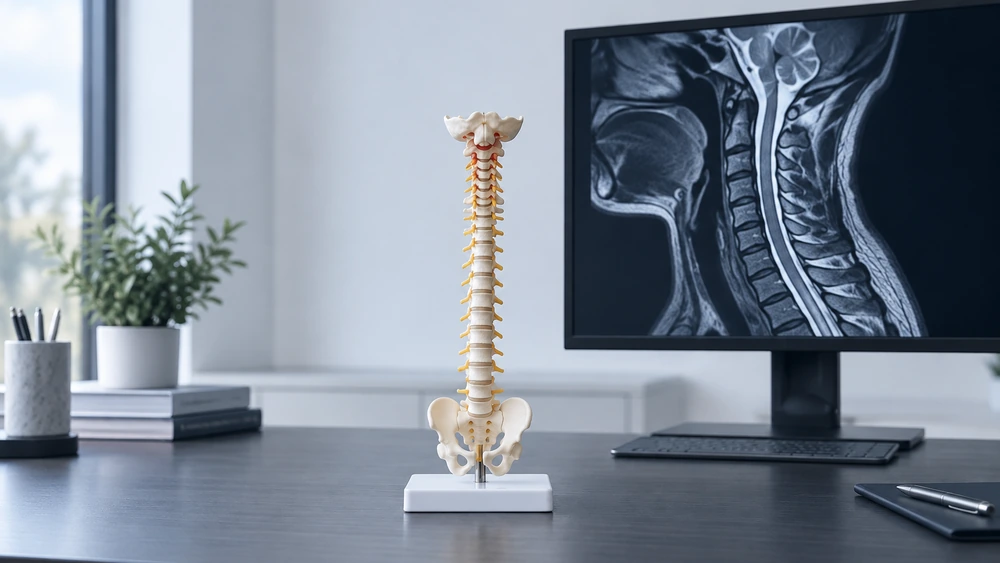
The cervical spine surgery is a procedure aimed at relieving pressure on the spinal cord or nerve roots in the neck. It stabilises vertebrae that have become worn, damaged or unstable. The cervical spine consists of seven vertebrae in the neck, along with the discs, ligaments, joints, and muscles that support them. It protects the upper part of the spinal cord and allows for head movement. When a disc bulges, a joint becomes arthritic, or bony overgrowth narrows the spinal canal, the nerves or spinal cord can become compressed. This can lead to pain, altered sensation, or loss of strength.
Surgery is typically performed in a hospital under anaesthetic. The primary goals can include:
- Decompression: Removing disc material or bone pressing on a nerve root or the spinal cord.
- Stabilisation or fusion: Joining vertebrae with bone grafts, cages, plates, or screws to reduce abnormal movement.
- Correction of deformity or instability: Especially in younger patients with structural spinal conditions.
Surgery is rarely the first option. According to NICE and NHS guidance, a conservative approach is recommended initially. This includes activity modification, pain relief, physiotherapy, targeted exercise, and sometimes image-guided injections. Surgery is considered when symptoms persist despite these measures, when compression is evident on imaging, or when progressive neurological signs indicate the need for earlier intervention.
Who is it for?
Cervical spine surgery may be suitable for adults and, in some cases, children and adolescents with specific structural conditions. Common reasons for referral include:
- Persistent neck pain that limits work, sleep, or daily activities.
- Arm pain, pins and needles, or numbness following a nerve pathway, known as cervical radiculopathy.
- Weakness in the arm or hand, such as reduced grip or difficulty with fine tasks.
- Clumsiness, altered balance, or unsteadiness when walking, which can suggest pressure on the spinal cord.
- Symptoms that have not improved after a reasonable period of physiotherapy and other non-surgical care.
- Instability or deformity of the cervical spine, including after injury.
It is important to note that not everyone with neck pain requires surgery. Many individuals improve without it. If pain is not associated with nerve compression, surgery may offer limited benefit.
How treatment works
Assessment
A full history and neurological examination, with an MRI, CT or X-ray arranged where nerve or cord involvement is suspected.
Discussion of options
Non-surgical care, injections and surgery are set out, with the benefits and risks of each.
Surgery
Where surgery is right, it is carried out from the front or back of the neck depending on the cause, removing the pressure and stabilising the segment if needed.
Recovery
Walking is encouraged early, with follow-up to monitor healing and, where a fusion has been performed, the bony union over several months.
Risks and Honest Expectations
Cervical spine surgery carries risks that are explained during the consent process. Potential risks include infection, bleeding or wound healing problems, temporary hoarseness or swallowing difficulty after surgery, persistent or recurrent pain or incomplete recovery of nerve function, failure of the bones to fuse (which may need further surgery), increased stress on adjacent spinal levels over time, anaesthetic risks, rarely nerve or spinal cord injury, and blood clots, which are reduced by early mobilisation and preventive measures.
Nerve-related arm pain often responds well to decompression and improves more predictably than neck pain alone. Where the spinal cord is compressed, the aim is to limit further neurological deterioration; improvement in strength, sensation or dexterity can be gradual and is not always complete. Some people notice marked improvement, others only partial relief.
Surgery is only recommended when non-surgical care has been fully explored and it is genuinely the right option.
QUICK FACTS
Procedure time
1 to 3 hours
Anaesthetic
General
Hospital stay
One to several nights
Walking
Same or next day
Back to desk work
A few weeks
Bony healing after fusion
Several months