
Overview
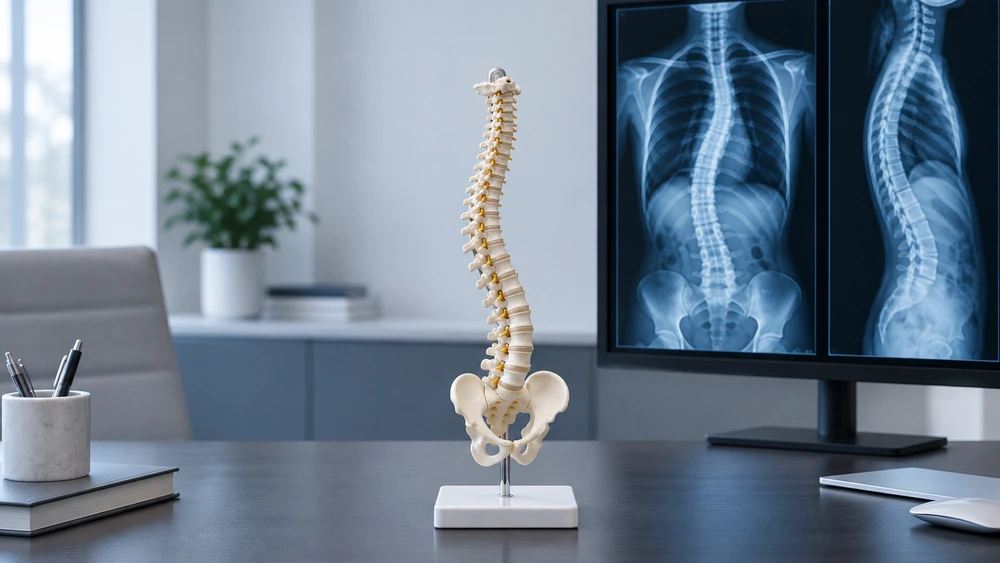
Scoliosis is a three-dimensional deformity. Rather than a simple sideways bend, the spine also rotates. This rotation often causes rib prominence or uneven waist and shoulders, which is often the first thing a patient or parent notices. The goal of corrective surgery for scoliosis is to reduce the curve, rebalance the spine, and secure this correction while the bone fuses into a stable position.
The most commonly performed operation is posterior spinal fusion with instrumentation. This involves attaching titanium or cobalt chrome screws, hooks, and rods to the vertebrae through the back of the spine. The rods are used to reduce and derotate the curve into a more balanced alignment, and bone graft is added so that the treated segment gradually fuses into one solid unit over the following months.
Corrective surgery for scoliosis is a major surgical intervention, typically not a first-line treatment. It usually occurs after a longer treatment pathway, including observation, monitoring with imaging, physiotherapy-based exercise programmes, pain management, and bracing in growing children.
Who is it for?
Corrective surgery suits a relatively small proportion of people with scoliosis. It may be appropriate where:
- A curve is large and has continued to progress despite monitoring or bracing
- An adolescent has a substantial curve with significant remaining growth, making further progression likely
- An adult has degenerative or adult scoliosis causing persistent back pain, leg pain, or nerve symptoms that have not responded to non-surgical treatment
- Spinal imbalance is affecting posture, walking, sitting tolerance, or the ability to stand upright
- There is visible trunk deformity causing genuine distress or functional difficulty
- A very severe curve is beginning to affect chest wall shape and breathing capacity
- Scoliosis is associated with a neuromuscular or syndromic condition and is affecting seating, comfort, or care
Not everyone with scoliosis needs an operation. Many mild curves remain stable and require nothing more than periodic review. It is estimated that only about 10% of scoliosis cases require surgical intervention, highlighting the importance of a thorough evaluation before proceeding.
How treatment works
Assessment
Your spinal curve, symptoms and imaging are assessed to determine whether surgery is appropriate.
Non-surgical Care First
Most patients are managed with monitoring, physiotherapy, pain management or bracing before surgery is considered.
Scoliosis Surgery
The spine is realigned using rods and screws, then stabilised with bone graft to allow the treated section to fuse.
Recovery
Physiotherapy begins soon after surgery, with a gradual return to normal activities over the following weeks and months.
Early Detection & Timely Diagnosis
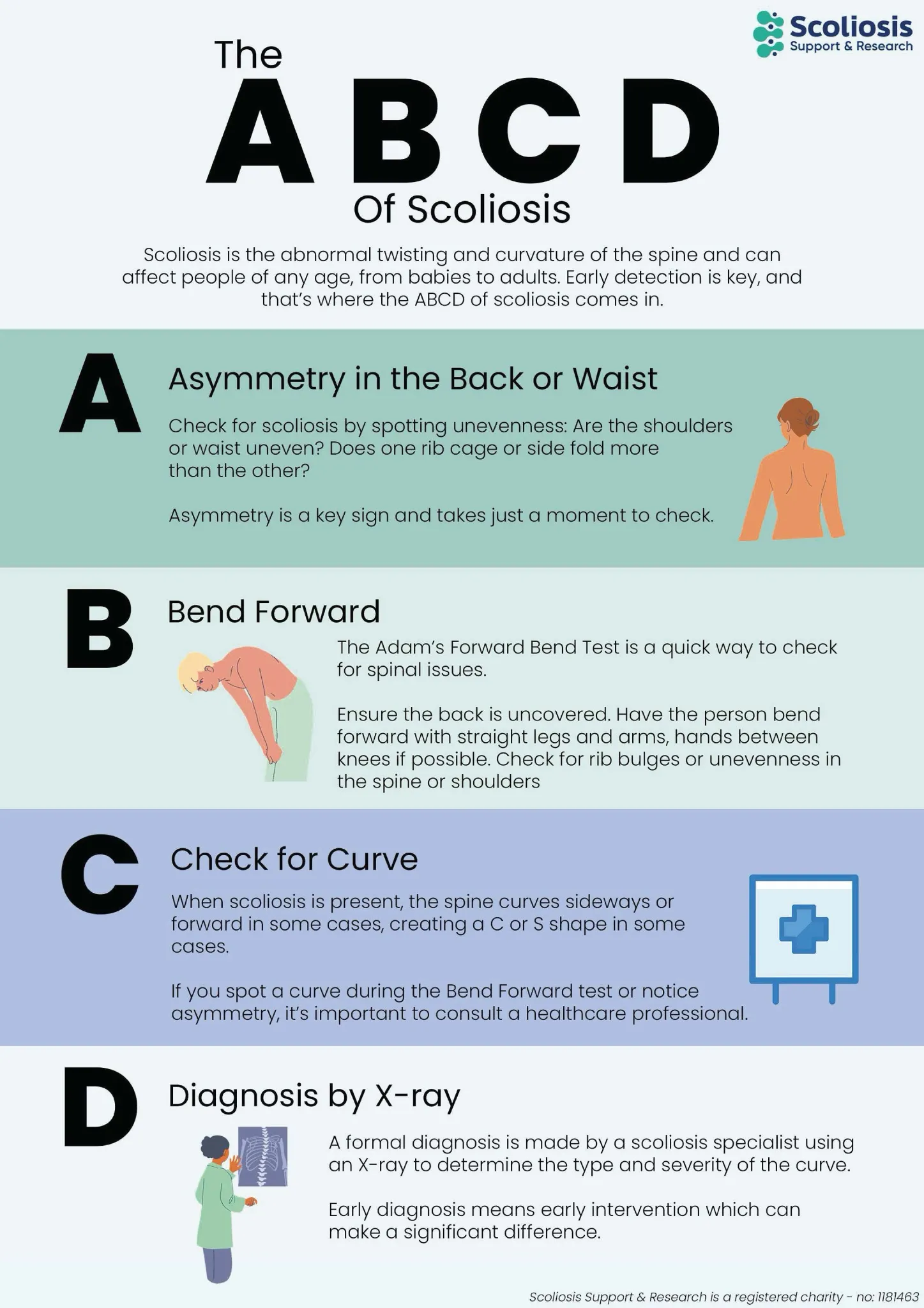
Early detection is critical to preventing progressive spinal deformity in children and adolescents. Mr Sudarshan Munigangaiah led the national ABCD early-detection initiative in collaboration with Scoliosis Support and Research (SSR), establishing a simple, memorable checklist for parents, educators, and GPs to identify early signs before significant curve progression occurs.
Risks and Honest Expectations
Most people with scoliosis never need surgery. When an operation is appropriate, risks include bleeding, infection, blood clots, wound healing problems, implant issues, incomplete fusion, and the general risks associated with anaesthesia. Rarely, nerve / spinal cord injury or further surgery may be required.
The aim is to create a balanced, stable spine rather than a perfectly straight one. Movement is reduced in the fused section, although most patients adapt well. Recovery and long-term outcomes vary between individuals.
Surgery is only ever recommended when non-surgical care has been fully explored and it is genuinely the right option.
QUICK FACTS
Procedure time
Several hours
Suitable For
Children, adolescents & adults
Anaesthetic
General
Hospital stay
Several days
Recovery
Light activities in a few weeks