
Overview
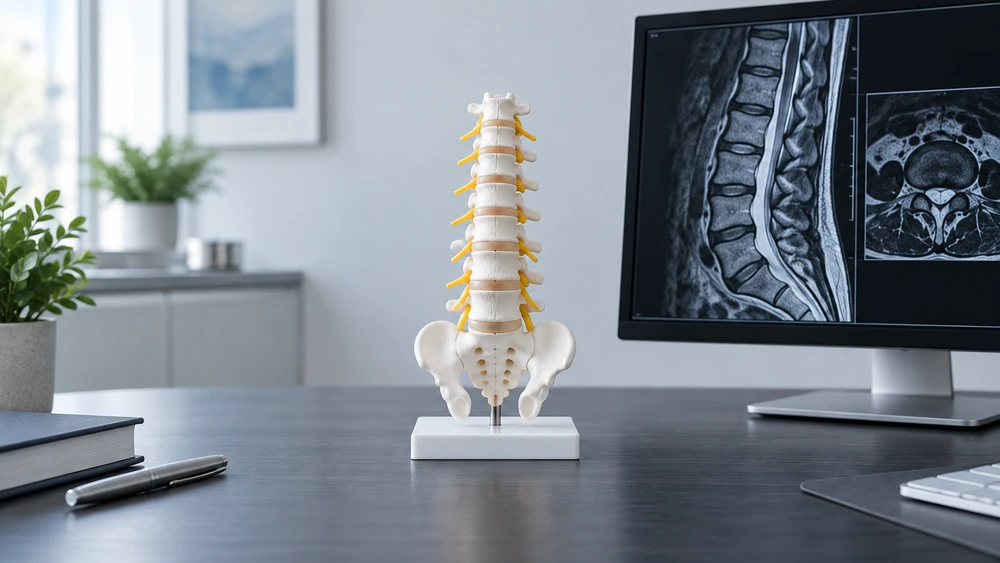
The spine contains a bony canal that protects the nerves travelling from the brain to the rest of the body. Age-related wear, thickened ligaments, enlarged joints, bone spurs, or a bulging disc can reduce the space inside this canal. When the nerves become squeezed, the result may be pain, pins and needles, numbness, or weakness in the arms or legs.
Decompression surgery creates more space around the affected nerve. The technique used depends on the diagnosis and the region involved:
- Lumbar decompression: removes a small amount of bone and thickened ligament from the back of the lower spine to open up the canal.
- Laminectomy or laminotomy: removes part or all of the bony arch over the affected level.
- Microdiscectomy: removes the portion of a herniated disc pressing on a nerve root, often in cases of persistent sciatica.
- Foraminotomy: widens the small openings where nerve roots exit the spine.
- Cervical decompression: relieves pressure in the neck and can be performed from the front or the back, depending on the cause.
Decompression surgery is occasionally combined with fusion or stabilisation where there is significant instability, slippage of a vertebra, or deformity. Surgery typically occurs later in the patient journey, after conservative treatments like physiotherapy and medication have been tried. According to NICE, surgical assessment is considered when symptoms persist, worsen, or significantly limit daily life.
Who is it for?
Decompression surgery may be considered for adults, and in selected cases, younger patients whose nerve compression has been confirmed on imaging and whose symptoms have not settled with conservative treatment.
A specialist opinion may be worthwhile if you have:
- Pain radiating into the buttock, thigh, calf, or foot, often described as sciatica.
- Leg pain, heaviness, or cramping on walking that eases when sitting or leaning forwards.
- Pain travelling into the shoulder, arm, or hand from the neck.
- Numbness, tingling, or altered sensation in a limb.
- Weakness affecting the foot, ankle, grip, or balance.
- Reduced walking distance or growing reliance on rest breaks.
- Symptoms continuing despite several weeks or months of physiotherapy and medication.
How treatment works
Assessment
Your symptoms, examination and scans identify the compressed nerve or spinal cord and whether surgery is appropriate.
Conservative Care First
Most patients begin with physiotherapy, activity modification, medication or injections before surgery is considered.
Decompression Surgery
The procedure removes the tissue pressing on the nerve or spinal cord. Fusion may be recommended if additional stability is required.
Recovery
Most patients begin walking within a day, with a gradual return to normal activities over the following weeks.
Risks and Honest Expectations
Decompression surgery carries risks including infection, bleeding, blood clots, cerebrospinal fluid leak, nerve injury, persistent symptoms and the general risks associated with anaesthesia. Some patients may require further surgery if symptoms return.
The aim is to relieve pressure on the affected nerve or spinal cord and improve function. Leg and arm pain often respond better than long-standing back or neck pain, and recovery varies depending on the underlying condition and duration of symptoms.
Surgery is only ever recommended when non-surgical care has been fully explored and it is genuinely the right option.
QUICK FACTS
Procedure time
1–2 hours
Anaesthetic
General
Hospital stay
Day case to 1+ nights
Mobilising
Same day or next day
Recovery
Around 3 months