
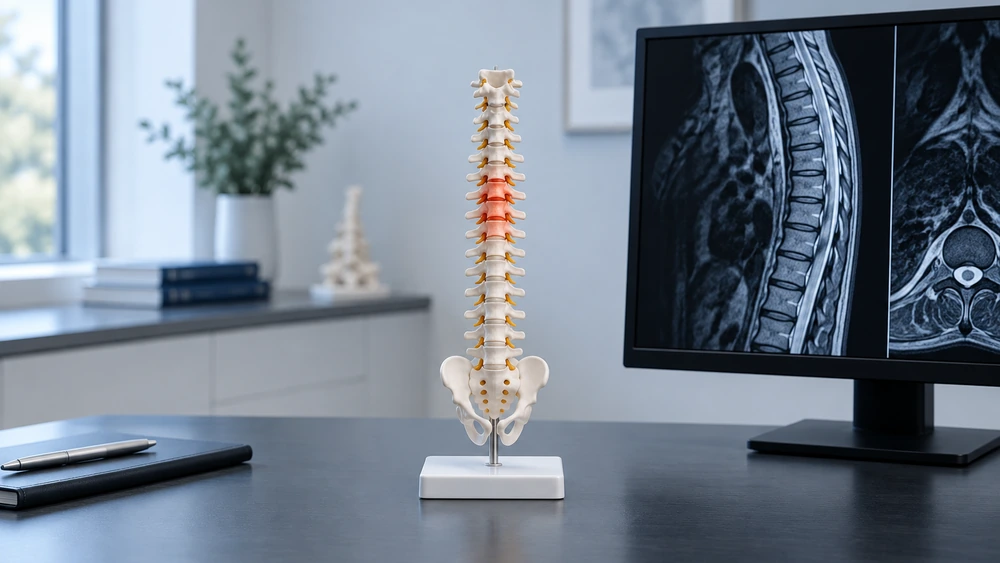
Overview
The spinal cord runs through a bony canal formed by the vertebrae. In the thoracic region, this canal is relatively narrow and the cord has a modest blood supply, meaning even moderate compression can disrupt nerve signals between the brain and legs.
Thoracic myelopathy develops when structures narrow this space. Common causes include thoracic disc herniation, ossification of the ligamentum flavum, degenerative facet joint overgrowth, spinal deformities like kyphosis, tumours, infections, or trauma.
Surgery for thoracic myelopathy is a decompressive procedure. Its purpose is to remove or reposition the structures pressing on the spinal cord, creating more space and reducing mechanical pressure. Instrumentation and fusion may be used to maintain stability and alignment, especially when removing bone or joints contributes to compression.
The aim of this surgery is vital. Decompression primarily seeks to halt or slow neurological deterioration and, where possible, allow for some recovery of function. Improvement can occur but varies considerably, depending on how long symptoms have persisted and the severity of the cord’s impact.
Who is it for?
Surgery for thoracic myelopathy may be considered for adults and, less commonly, younger patients with imaging-confirmed compression of the thoracic spinal cord, accompanied by corresponding symptoms and clinical signs. It is more likely to be recommended when symptoms worsen over weeks or months, when walking and balance increasingly suffer, or when there are early changes in bladder or bowel function.
Symptoms that may prompt assessment include:
- Progressive difficulty walking, unsteadiness, or legs that feel heavy, stiff, or clumsy
- Weakness in one or both legs
- Numbness, tingling, or altered sensation in the legs, trunk, or abdomen
- A tight band-like sensation around the chest or abdomen
- Increased leg stiffness or spasms
- Frequent trips or falls, or needing support to walk
- Changes in bladder or bowel control, or difficulty passing urine
- Mid back pain, sometimes radiating around the ribs
Some patients with mild, stable symptoms may reasonably be monitored instead.
How treatment works
Assessment
Your symptoms, examination and scans confirm whether the spinal cord is compressed and if surgery is appropriate.
Planning
The cause and location of compression are identified to plan the safest surgical approach.
Decompression Surgery
Pressure is removed from the spinal cord. Fusion and stabilisation may be performed if needed to maintain spinal stability.
Recovery
Physiotherapy begins shortly after surgery, with neurological recovery continuing over several months.
Risks and Honest Expectations
Thoracic spinal surgery is a complex procedure with risks including infection, bleeding, cerebrospinal fluid leak, blood clots, implant problems, nerve or spinal cord injury, and the general risks associated with anaesthesia. Some patients may also require further surgery.
The main aim is to prevent further neurological deterioration rather than restore normal function. Some patients improve, while others achieve stabilisation of symptoms. Recovery varies, and neurological improvement may continue for 3–6 months.
For mild, non-progressive cases, monitoring with repeat imaging, physiotherapy and pain management may be appropriate.
QUICK FACTS
Procedure time
Several hours
Anaesthetic
General
Hospital stay
A few days
Mobilising
Within 1–2 days
Recovery
3–6 months