AGE
15
CONDITION
Adolescent idiopathic scoliosis
STAGE ONE
4 weeks halo gravity traction
STAGE TWO
Posterior correction and fusion
MONITORING
Cord monitoring
Presentation
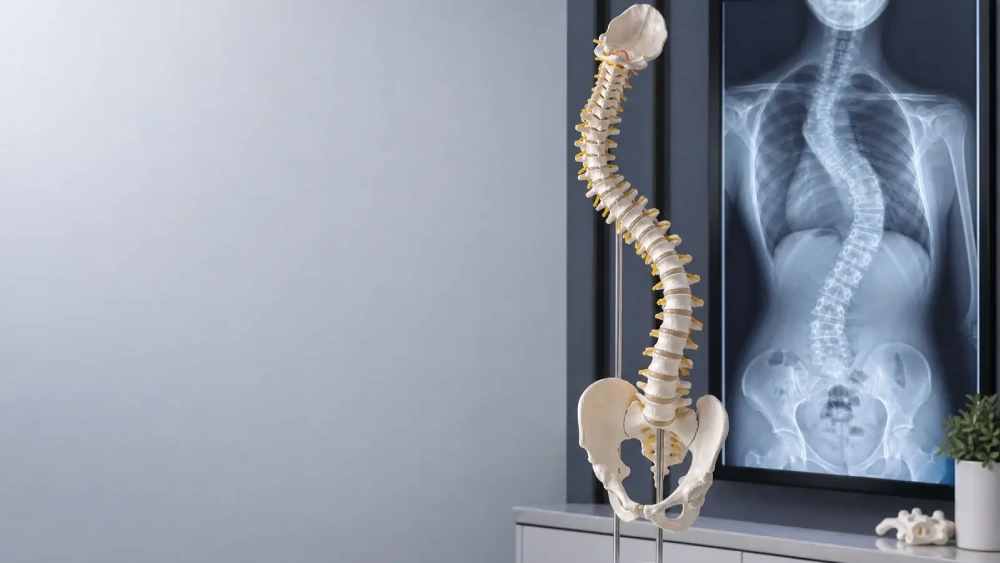
The scoliosis had been present for some time before assessment. A delayed presentation had allowed it to progress into a large, stiff curve, the kind that cannot safely be corrected in a single operation without placing the spinal cord under undue strain.
Investigation
Standing full-length X-rays measured the curve and, just as importantly, its rigidity. A stiff curve and a flexible one are approached very differently, and here the stiffness shaped the whole plan.
Shared decision
A staged approach was explained in full to the young person and their family: a period of gentle traction first, then corrective surgery. What each stage involved, and why one operation alone would not be safe, was set out before anything began.
Treatment
The treatment consisted of four weeks of halo gravity traction, a versatile technique for large, stiff curves, which gradually loosened the spine. Posterior scoliosis correction and instrumented fusion followed, with multiple osteotomies to release the stiffest segments.
Outcome
The staged approach achieved a balanced correction that would not have been safe in a single sitting. Spinal cord monitoring was used throughout, and the spine was left balanced and stable.